As I'm currently writing, my essay and creative body of word are done. With the addition of my offline research pages - which I have now finished and converted into a PDF. However, I have got the majority of the transcribing done (literally only several minutes left to do now but probably take awhile to do unfortunately) of the first interview. It has taken way longer than it needed to be, so I've only decided to do only transcribe of one interview and the other one I shall refer to my interview recording.
Update: Due to the time I have left, I will not be able to fully transcribe interview and put a note referring to the rest of the recorded interview
Whilst I'm here, I going to write an evaluation of the RIPU project.
Though it has been times when I didn't like the RIPU project and other times when I have really enjoyed it, I have learnt a lot during the project. I did have a lot of knowledge on the subject beforehand due to the subject I am doing for RIPU has been something of a passion for many years and my BA research report was based on the same topic (I looked at pre-existing games have helped not how games themselves can form a therapy).
I also actually really enjoyed writing my main research report for this unit too and I honestly wished I had a bit more of a higher word limit, as this topic has a lot of potential and have many avenues of research I can go down. If I didn't have to worry about work and ASU1 project, I would without a doubt would of gotten more work done for this project. Which is a shame as I know there a lot more I could have done. But with what I have got for this project already, I am extremely happy with. I'm looking forward in expanding my work further within this area (Video Game Therapy)
Showing posts with label RIPU. Show all posts
Showing posts with label RIPU. Show all posts
Tuesday, 12 December 2017

Sunday, 10 December 2017
RIPU - Research
This week I finished my essay and at the beginning of the week I managed to get more of the transcribing that needed to be done for one of my interviews - shan't transcribe the other one as it took far too long. I've found some more research that I am adding to my offline research papers.
Next week I'm going to proofread my essay and double check everything before I had in.
Next week I'm going to proofread my essay and double check everything before I had in.
Saturday, 2 December 2017
RIPU - Creative Body of Work
For RIPU this week, I once again focused on doing some creative body of work. I haven't talked about it much in my blog, but I have got a lot more done for my offline research pages. A few more pages and I think I will be done for these.


Saturday, 25 November 2017
RIPU - Research
Quick post this morning:
I haven't done much for RIPU, as I've been focusing on my ASU1 project this week. However, I did managed to get another interview done for my project with a researcher.
I also managed to clean up some of my research pages I have done for RIPU - they were a tad messy to use the term lightly.
But this week I also tried to find this particular story about games, but couldn't for the life of me I couldn't find it (which is really annoying, as it was from many years ago and I thought it was from one place but it wasn't. So I was tried for a few hours to find the article), But whilst trying to find the original story, I did find another similar story regarding a similar situation that happened seen here: 6 Acts of Real-Life Heroism Made Possible by Video Games - this also shows how people helped others which was made possible by gaming.
I was also recommend during my interview to look at Nice National Institute for Health Care Excellence - this has all the latest evidence, research and models for treating mental health
Nice National Institute for Health and Care Excellence
I haven't done much for RIPU, as I've been focusing on my ASU1 project this week. However, I did managed to get another interview done for my project with a researcher.
I also managed to clean up some of my research pages I have done for RIPU - they were a tad messy to use the term lightly.
But this week I also tried to find this particular story about games, but couldn't for the life of me I couldn't find it (which is really annoying, as it was from many years ago and I thought it was from one place but it wasn't. So I was tried for a few hours to find the article), But whilst trying to find the original story, I did find another similar story regarding a similar situation that happened seen here: 6 Acts of Real-Life Heroism Made Possible by Video Games - this also shows how people helped others which was made possible by gaming.
I was also recommend during my interview to look at Nice National Institute for Health Care Excellence - this has all the latest evidence, research and models for treating mental health
Nice National Institute for Health and Care Excellence
Sunday, 19 November 2017
RIPU - Creative body of work
This week I focused on getting some of the creative body of work stuff done.
I also managed to conduct an interview with a professionals within a mental health trust in Norfolk for my RIPU project.


'The idea is simple. The self-harmer simply draws a butterfly on their place(s) of self-harm and, if the butterfly fades without them self-harming, it means it has lived and flown away, giving them a sense of achievement. Whereas if they do self-harm with the butterfly there; they will have to wash it off. If that does happen, they can start again by drawing a new one on.' - Recoveryourlife.com

I also managed to conduct an interview with a professionals within a mental health trust in Norfolk for my RIPU project.


This last image is a reference to the Butterfly project, which seeks out to using they symbol of a butterfly to prevent people from self-harming. This has influence some of my other creative body of work. Recoveryourlife.com - As seen here and I quote:
'The idea is simple. The self-harmer simply draws a butterfly on their place(s) of self-harm and, if the butterfly fades without them self-harming, it means it has lived and flown away, giving them a sense of achievement. Whereas if they do self-harm with the butterfly there; they will have to wash it off. If that does happen, they can start again by drawing a new one on.' - Recoveryourlife.com

Friday, 10 November 2017
RIPU - Research and Creative Body of Word
This week for RIPU, I whilst doing my pages of research, I wanted to make a head start for the creative body of work needed for the unit. I wanted to create a concept piece for depression. Results seen below. I used a lot of black in my concept piece as the colour black, scientifically means the absence of light and often used figuratively represents darkness. I wanted to use these two meanings and use them towards the character design. Why did I choose this? Often, when people are depressed they feel like there's no light. They feel darkness surrounds them - I combine these together to create the character design below


Saturday, 4 November 2017
RIPU - Research
This week, I didn't do as much as I would like due to being ill. However, I did begin to look at how pre-existing games have help to educate people on mental health. I revisited Life is Strange due to new articles coming out and the second episode of the prequel now out. I didn't have time to play the game myself, but I did watch the playthrough by Eurogamer to see if the prequel tackles mental health like the first one
Eurogamer playthough of Life is Strange: Before The Storm: Episode 1 Playthrough Episode 2 Playthrough
In addition to this, I looked at the history of art therapy, as though I am now looking at a full games design perspective and looking at how games themselves can be a therapy, I originally started this idea (many, many years ago) wanting to approach this from a art therapy perspective due to games being an art form and art therapy is a contemporary approach towards therapy - something which, if all goes well in proving games themselves can potentially be a therapy (games therapy) this would also be another contemporary approach towards therapy.
ArtTherapyJournal.org: The History of Art Therapy
Art Therapy — History & Philosophy
The History of Art Therapy and its Relationship to Art Education
A Brief History of Art Therapy: From Freud to Naumburg and Kramer
As reiterated in the articles/pdf above, despite being a relatively new form of therapy, art to communicate one's thoughts and ideas has been used since the beginning of human history. However, it wasn't until mid 20th century the practice of art as therapy was first introduced.
Despite being (in retrospect) a new form of art and entertainment, games have been used to educate and help people with mental health issues, but games themselves have yet to become entirely formed into a new type of therapy. Due to history of helping and educating others, it's surprising games haven't become a form of therapy. However, this may be due to it being a relatively new form of art and entertainment; most seeing it just entertainment; people believing games are still believing it's only for children (despite the average gamer is 35 years old) and lastly, usually being the scapegoat for horrible events or will cause damage.
As seen in this article Boo! A brief history of technology scares - people once believe when writing became more common, people would become more forgetfully. Also, when books became more common they would do damage and I quote 'confusing and harmful'.
So, unfortunately games are currently doing their time under the scapegoat spotlight - just like films before it
Polygon article about survey about the average gamer: Take a look at the average American gamer in new survey findings
Big Fish article about the average gamer: 2017 Video Game Trends and Statistics – Who’s Playing What and Why?
Eurogamer playthough of Life is Strange: Before The Storm: Episode 1 Playthrough Episode 2 Playthrough
In addition to this, I looked at the history of art therapy, as though I am now looking at a full games design perspective and looking at how games themselves can be a therapy, I originally started this idea (many, many years ago) wanting to approach this from a art therapy perspective due to games being an art form and art therapy is a contemporary approach towards therapy - something which, if all goes well in proving games themselves can potentially be a therapy (games therapy) this would also be another contemporary approach towards therapy.
ArtTherapyJournal.org: The History of Art Therapy
Art Therapy — History & Philosophy
The History of Art Therapy and its Relationship to Art Education
A Brief History of Art Therapy: From Freud to Naumburg and Kramer
As reiterated in the articles/pdf above, despite being a relatively new form of therapy, art to communicate one's thoughts and ideas has been used since the beginning of human history. However, it wasn't until mid 20th century the practice of art as therapy was first introduced.
Despite being (in retrospect) a new form of art and entertainment, games have been used to educate and help people with mental health issues, but games themselves have yet to become entirely formed into a new type of therapy. Due to history of helping and educating others, it's surprising games haven't become a form of therapy. However, this may be due to it being a relatively new form of art and entertainment; most seeing it just entertainment; people believing games are still believing it's only for children (despite the average gamer is 35 years old) and lastly, usually being the scapegoat for horrible events or will cause damage.
As seen in this article Boo! A brief history of technology scares - people once believe when writing became more common, people would become more forgetfully. Also, when books became more common they would do damage and I quote 'confusing and harmful'.
So, unfortunately games are currently doing their time under the scapegoat spotlight - just like films before it
Polygon article about survey about the average gamer: Take a look at the average American gamer in new survey findings
Big Fish article about the average gamer: 2017 Video Game Trends and Statistics – Who’s Playing What and Why?
Saturday, 28 October 2017
RIPU - Research
This week I mainly looked at documentaries that could help give me a better insight into mental health - specifically anxiety and depression. But I also looked at other documentaries regarding other mental health issues.
Though I looked at more, these are the main ones I looked at:
BBC The Secret Life of The Manic Depressive: Part 1 Part 2
Social Anxiety Documentary: Afraid of People: Link To Video
The Not So Secret Life of the Manic Depressive: Ten Years On: Link to Video
Though I looked at more, these are the main ones I looked at:
BBC The Secret Life of The Manic Depressive: Part 1 Part 2
Social Anxiety Documentary: Afraid of People: Link To Video
The Not So Secret Life of the Manic Depressive: Ten Years On: Link to Video
Saturday, 21 October 2017
RIPU - Research
This week, I looked at how games have explored mental health and how already existing games have helped.
GameSpot have two videos on this matter (found through re-watching the Low Batteries series by Eurogamer via recommendations bar)
Links to the GameSpot Videos:
How Video Games Explore Mental Illness
Video Games Vs. Depression
Video Games Vs. Depression:
This video explores at how gamers views on how games have helped them through their mental health problems or not.
As mentioned in this video, the relationship between depression and video games are complex. Some use it as a crutch to get through the day (in a healthy way) but others can escape into gaming so much, that it can make their depression worse or getting addicted to the video games themselves.
The article talked about in the video:
Definition Of Insanity: Games & The Stigma Of Depression
When talking about the article, it talks about the negative impact of gaming on depression, a point though I thought about and looked about briefly, I haven't taken into account properly. I looked at the negative portrayal of depression within games and video game addiction, but I never thought about HOW games can impact depression and could make it worse.
One of the major aspects I took away from the video is the community aspect and gaining friend via online gaming and helping them though the bad times. One of the players, due to health problems (not the depression but did cause the depression) couldn't go out but made friends online and manage to socialize.
GameSpot have two videos on this matter (found through re-watching the Low Batteries series by Eurogamer via recommendations bar)
Links to the GameSpot Videos:
How Video Games Explore Mental Illness
Video Games Vs. Depression
Video Games Vs. Depression:
This video explores at how gamers views on how games have helped them through their mental health problems or not.
As mentioned in this video, the relationship between depression and video games are complex. Some use it as a crutch to get through the day (in a healthy way) but others can escape into gaming so much, that it can make their depression worse or getting addicted to the video games themselves.
The article talked about in the video:
Definition Of Insanity: Games & The Stigma Of Depression
When talking about the article, it talks about the negative impact of gaming on depression, a point though I thought about and looked about briefly, I haven't taken into account properly. I looked at the negative portrayal of depression within games and video game addiction, but I never thought about HOW games can impact depression and could make it worse.
One of the major aspects I took away from the video is the community aspect and gaining friend via online gaming and helping them though the bad times. One of the players, due to health problems (not the depression but did cause the depression) couldn't go out but made friends online and manage to socialize.
Personal takeaway from this video: After watching this video, I was in awe on hearing how games have helped their lives and hearing their own stories. Though I've done essays on this subject before, but it always manage to touch my heart on hearing people's own experiences and hearing their stories - it gives a more human face to the research. This always reinforce my beliefs on games being a form of therapy, drives my passion for this concept and drives my passion more to help people, like these with my greatest hobby.
How Video Games Explore Mental Illness:
This video helped me finding games that explore mental health. But one game that stood to me within this video was The Town of Light; a game based on a controversy within a mental hospital during the 1930's.
Link to the steam page for The Town of Light: The Town of Light
One concept I never thought about before is using games to educate people on how the mental health system use to be and how that system use to be. This also give light on how vital it is to keep mental health trust funded as if our current system keeps getting budget cuts, the system could end up being as flawed as it once was. I also didn't think of using horror games to explore metal health issues and thought it would be counterproductive (it was counterproductive trying to help anxiety by cause anxiety) so I did rule the genre out completely. However, The Town of Light have made me reconsider this stance.
More videos on Mental Health and Games I looked at this week:
Mental Health and gaming by GameByte: Mental Health and Gaming
Hellblade: A Groundbreaking Take on Mental Illness - Reboot Episode 12 by GameSpot: Hellblade: A Groundbreaking Take On Mental Illness - Reboot Episode 12
How Hellblade Nails Mental Health - Low Batteries by Eurogamer: How Hellblade nails mental health - Low Batteries
Other videos I Looked at whilst researching:
Why Hellblade: Senua's Sacrifice is More Important to Gaming Than You Think by GameSpot: Why Hellblade: Senua's Sacrifice Is More Important To Gaming Than You Think - Note: This video is helpful for me if I want to release my game I want to create during MA
HellBlade Has Noble Ambitions But it Also Had Us Worried (Hands-on Impressions) by Eurogamer: Hellblade has noble ambitions but it also has us worried (Hands-on impressions)
Also this week I was sent an article that would be of interest by The Guardian Staying appy: mental health apps deliver mixed results
Also this week I was sent an article that would be of interest by The Guardian Staying appy: mental health apps deliver mixed results
Looking at this article has given me an idea of integrating an app into a game that may help people to do stuff outside of the main game - similar to Epic Win.
It's also interesting to see other apps designed to help people with mental health issues. Though it does point out a good point that (to quote the article) The mental health app marketplace is “very messy”.
This has given me to an insight that I hadn't thought of before - there's a lot of apps for helping mental health but from what it seems from the article it's been over saturated. This article also points out that the best way to find the best apps is to see if they have had input with professionals. I need to keep all of this in account if I am to pursue this idea further
It's also interesting to see other apps designed to help people with mental health issues. Though it does point out a good point that (to quote the article) The mental health app marketplace is “very messy”.
This has given me to an insight that I hadn't thought of before - there's a lot of apps for helping mental health but from what it seems from the article it's been over saturated. This article also points out that the best way to find the best apps is to see if they have had input with professionals. I need to keep all of this in account if I am to pursue this idea further
Friday, 13 October 2017
RIPU - Research
This week I done some more research and tried to plan what I wanted in my research report, what I need in my report, sections I could add etc. Also noted down what research I needed to do.


Whilst researching I found a series created by Eurogamer about games and mental health (found here: https://www.youtube.com/watch?v=zzIFEUmVZ_Q&list=PLTZXfIDHhP2t-rZBhWS7VAH0dTR4cGW14)
This lead onto finding a TEDx Talks talk by Johnny Chiodini called 'Can a video Game Save A Life?'. This talk is about how games can impact people with mental health issues
(Found here: https://www.youtube.com/watch?v=6rLJaVohSRQ)
Other videos on mental health and games created by Eurogamer:


Friday, 6 October 2017
RIPU - Research
This Week, my main focus was to get started on research for the RIPU project.
Quick note before I get into this blog post: Most of the main research I will be doing for RIPU, will be done offline and within research pages. For research on blogs however, they are either things that may not directly tie into my main project or something I wish to talk more freely about as they are ideas bouncing around my head.
I originally wanted to expand my research report I did for BA GAD, however, MA Games I know what to go into a different direction. Instead of looking at how games have already help and can help in the future - I'm going to look at how games can be a form of therapy.
To aid with this, I have gone to the well-being service and left a business card, in the hopes that a therapist or psychologist will get back to me and will be happy to be interviewed. Due to the subject, it's vital that I get the right information.
In addition to this, I began to look at books and current therapies, which could help form the basics of games therapy or to show that some principles have already been used and could be used for games.
One therapy that keep popping up is Cybertherapy. One element that particularly fascinated me about cyber therapy is that some therapist use virtual environments and uses it as controlled exposure for those with social anxiety - to which the client can use what ever learnt in those sessions and use it in real life. This idea could lend well with games therapy.
I looked at the NUA online library sources to find articles and helpful journals that could aid my research report
https://www.huffingtonpost.com/michael-sigman/cybertherapy-is-cyber-but_b_788712.htmlhttps://www.psychologies.co.uk/self/is-cybertherapy-the-future.html
https://www.citelighter.com/science/psychology/knowledgecards/cybertherapy

Quick note before I get into this blog post: Most of the main research I will be doing for RIPU, will be done offline and within research pages. For research on blogs however, they are either things that may not directly tie into my main project or something I wish to talk more freely about as they are ideas bouncing around my head.
I originally wanted to expand my research report I did for BA GAD, however, MA Games I know what to go into a different direction. Instead of looking at how games have already help and can help in the future - I'm going to look at how games can be a form of therapy.
To aid with this, I have gone to the well-being service and left a business card, in the hopes that a therapist or psychologist will get back to me and will be happy to be interviewed. Due to the subject, it's vital that I get the right information.
In addition to this, I began to look at books and current therapies, which could help form the basics of games therapy or to show that some principles have already been used and could be used for games.
One therapy that keep popping up is Cybertherapy. One element that particularly fascinated me about cyber therapy is that some therapist use virtual environments and uses it as controlled exposure for those with social anxiety - to which the client can use what ever learnt in those sessions and use it in real life. This idea could lend well with games therapy.
I looked at the NUA online library sources to find articles and helpful journals that could aid my research report
https://www.huffingtonpost.com/michael-sigman/cybertherapy-is-cyber-but_b_788712.htmlhttps://www.psychologies.co.uk/self/is-cybertherapy-the-future.html
https://www.citelighter.com/science/psychology/knowledgecards/cybertherapy
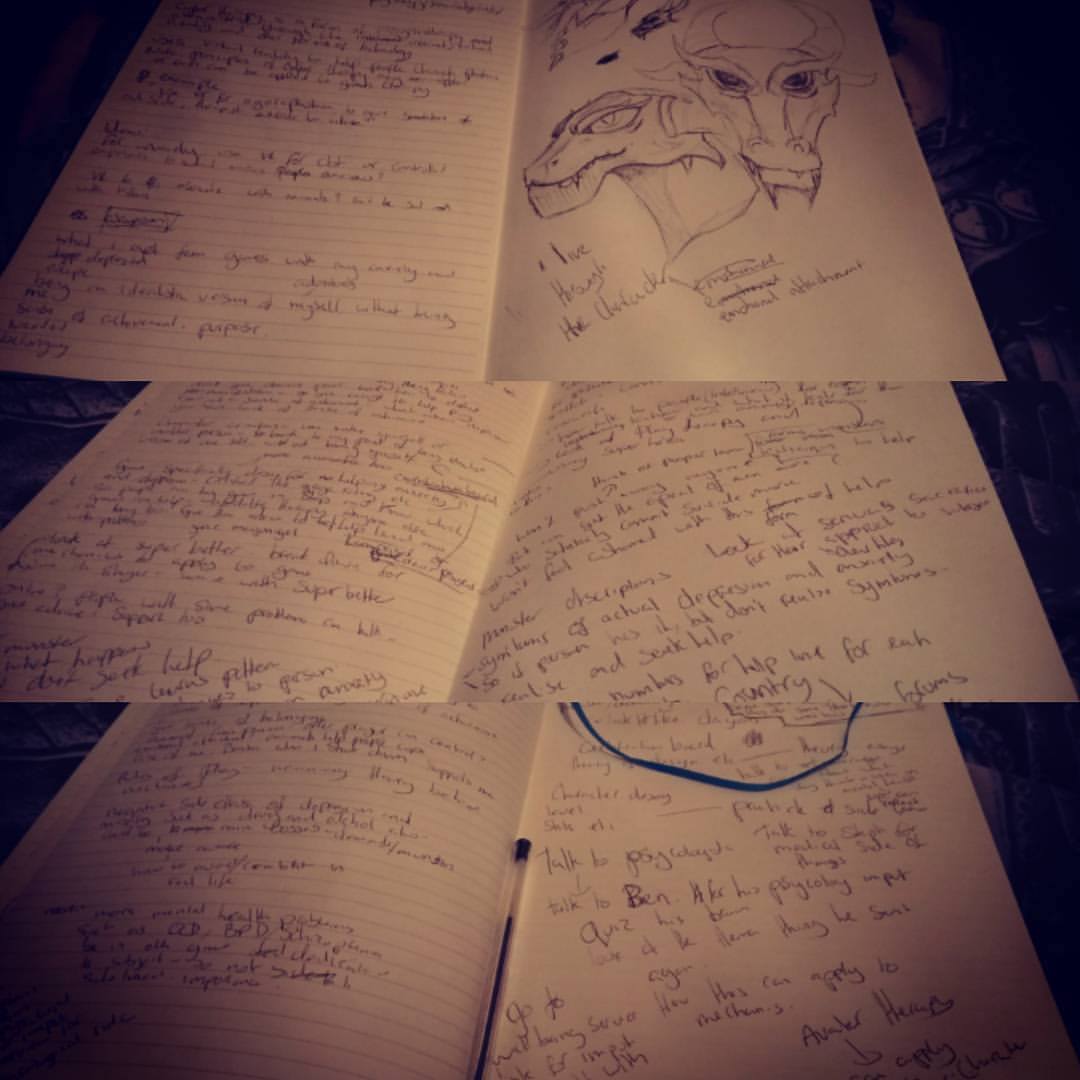
One idea that keeps coming up in my notes is creating a certification board for video games therapy (VGTC) - a bit like the PEGI certification. Which is comprised of game designer and psychologist, where once games meet the criteria it can have that label, this means any game can have that label and can be easily seen that it is there for therapy. The beauty of games is that they are easily accessible.
Mental health trust keep having budget cuts - which means longer waiting times and will have major negative repercussions. Not many can afford private treatment (from research, it's at least £300) and have to go to the NHS. But due to budget cuts, this will make it far less accessible and this could be detrimental to the well-being of people
Three articles from this year alone about mental health trust budget cuts:
If games could have this certification, people aren't able to go to NHS due to long wait times or can't afford the cost of private treatment - these games could be a far more affordable and accessible form of treatment.
Friday, 29 September 2017
MA - Master in Games
Hello all! Apologies for absence for so long!
I've graduated from NUA with a degree in Games Art and Design and now back studying MA games.
For this term for my masters, I have two projects: ASU1 where I'm creating a show piece and RIPU where I'm doing a research report.
This is the first week, so I'm getting ideas down, so I know where I am going.
But one thing that is for certain, that I'm going to look at how games can help anxiety and depression - essentially a follow up from my research report from BA Games
I've graduated from NUA with a degree in Games Art and Design and now back studying MA games.
For this term for my masters, I have two projects: ASU1 where I'm creating a show piece and RIPU where I'm doing a research report.
This is the first week, so I'm getting ideas down, so I know where I am going.
But one thing that is for certain, that I'm going to look at how games can help anxiety and depression - essentially a follow up from my research report from BA Games
Subscribe to:
Posts (Atom)